
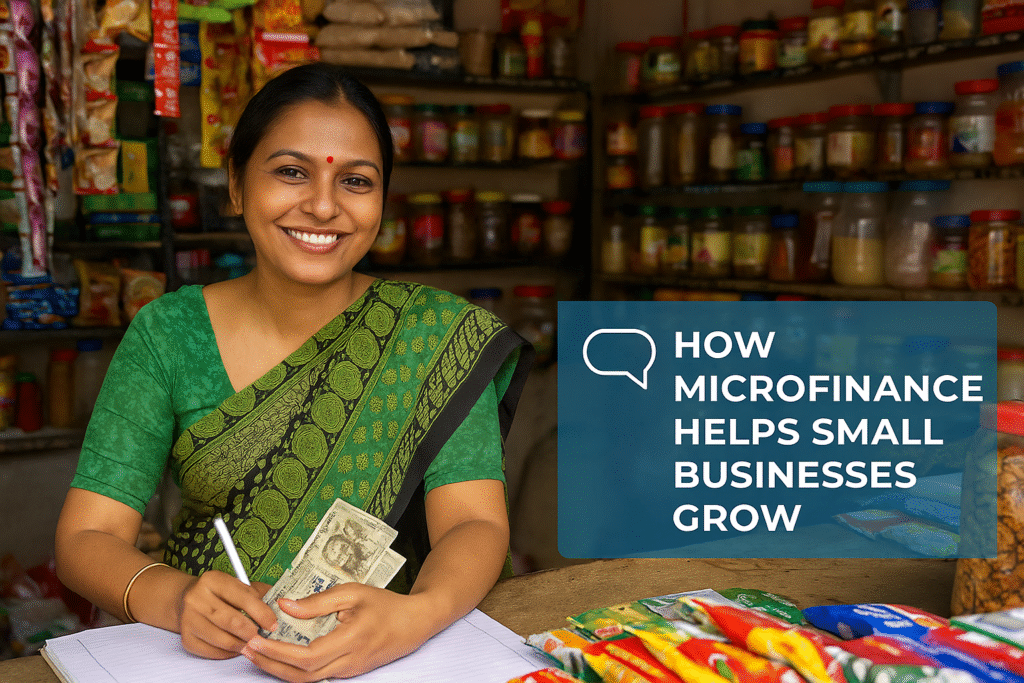
In India, lakhs of small entrepreneurs and local shop owners have big dreams — but limited access to funds often holds them back.
That’s where microfinance steps in — offering financial support, guidance, and hope to those who need it most.
Let’s explore how microfinance empowers small businesses to grow, thrive, and transform lives.
1. What Is Microfinance?
Microfinance means providing small loans and other financial services to people or businesses that don’t have access to traditional banking.
It’s designed especially for:
- Small business owners
- Self-employed individuals
- Women entrepreneurs
- Rural and semi-urban workers
Microfinance institutions (MFIs) give small loans — usually from ₹5,000 to ₹2,00,000 — with flexible repayment options, helping people start or expand their businesses.
2. Boosts Business Startups and Growth
For many small entrepreneurs, the biggest barrier is starting capital.
Microfinance solves this by providing easy, low-collateral loans, allowing them to:
- Buy tools or equipment
- Stock inventory
- Rent a shop or workspace
- Hire staff
Example:
A local tailor can buy a sewing machine with a microloan and start taking more orders, increasing income and stability.
3. Empowers Women Entrepreneurs
One of the most powerful impacts of microfinance is on women’s empowerment.
Many MFIs in India, like SKS Microfinance or Ujjivan, focus on lending to women, helping them build financial independence.
Women use these funds to start home-based businesses like:
- Stitching or handicraft work
- Small grocery or beauty shops
- Food stalls or catering services
This not only grows family income but also improves community development.
4. Encourages a Habit of Saving and Repayment
Microfinance isn’t just about lending money — it’s about building financial discipline.
Regular loan repayments and savings habits help small business owners:
- Manage cash flow
- Plan for emergencies
- Become creditworthy for future, larger loans
Over time, this creates a foundation for long-term financial health.
5. Strengthens Local Economies
When small businesses grow, they generate jobs, income, and confidence within the community.
This ripple effect leads to:
- More employment opportunities
- Local market development
- Reduced poverty levels
Microfinance, therefore, isn’t just helping individuals — it’s driving inclusive economic growth.
6. Provides Financial Education and Support
Many microfinance programs also include financial literacy training, teaching borrowers about:
- Budgeting
- Savings management
- Smart investments
- Responsible borrowing
This knowledge helps entrepreneurs make better decisions, ensuring sustainable business growth.
Final Thoughts
Microfinance is more than a loan — it’s a lifeline for dreams.
It enables small business owners to take control of their futures, grow steadily, and contribute to their communities.
As access to microfinance expands, India’s small business ecosystem becomes stronger, more self-reliant, and full of opportunity.
“Microfinance doesn’t just change businesses — it changes lives.”